
Neurolens® — Real Relief from Headaches, Eye Strain & Neck Pain

Stop Headaches, Eye Strain, and Neck Pain at the Source
Neurolens® Treatment in Metro Detroit
If you live with daily headaches, screen fatigue, or tightness in your neck and shoulders, you are not imagining it. Your eyes may be working harder than they should.
At Michigan Eye Consultants, we use Neurolens® technology to measure subtle eye misalignment that standard glasses do not detect. When the eyes are slightly misaligned, the brain must constantly compensate. That compensation creates strain. Strain becomes headaches, fatigue, tension, and frustration.
Neurolens lenses are designed to reduce that strain by gently realigning how your eyes work together. This is not just clearer vision. This is visual comfort engineered for real life.
Schedule Your Neurolens Evaluation Today.
Do These Symptoms Sound Familiar?
Many patients come to us after years of trying different prescriptions, blue light filters, or even medication. The discomfort never fully goes away.
Neurolens may help if you experience:
Neck and shoulder tension during reading or screen work
Blurred or fluctuating vision
Difficulty concentrating
Symptoms that worsen as the day progresses
If your symptoms build throughout the day, your visual system may be under constant stress.
Why Regular Glasses Don’t Fix This
Traditional lenses correct how clearly you see. They do not correct how efficiently your eyes work together.
Even a small amount of misalignment forces your brain to work overtime to maintain single vision. That extra effort activates facial and neck muscles and increases neurological load. Over time, this constant compensation creates real physical discomfort.
Neurolens uses patented contoured prism technology that gradually changes across the lens from distance to near. This allows your eyes to align more naturally at every working distance. When alignment improves, strain decreases. When strain decreases, symptoms improve.
More than 90 percent of patients prescribed Neurolens report measurable relief.
What Happens During a Neurolens Evaluation
We approach this medically, not casually.
Step 1: Detailed Symptom Review
We identify exactly when your discomfort occurs and how it affects your daily life.
Step 2: Objective Digital Measurement
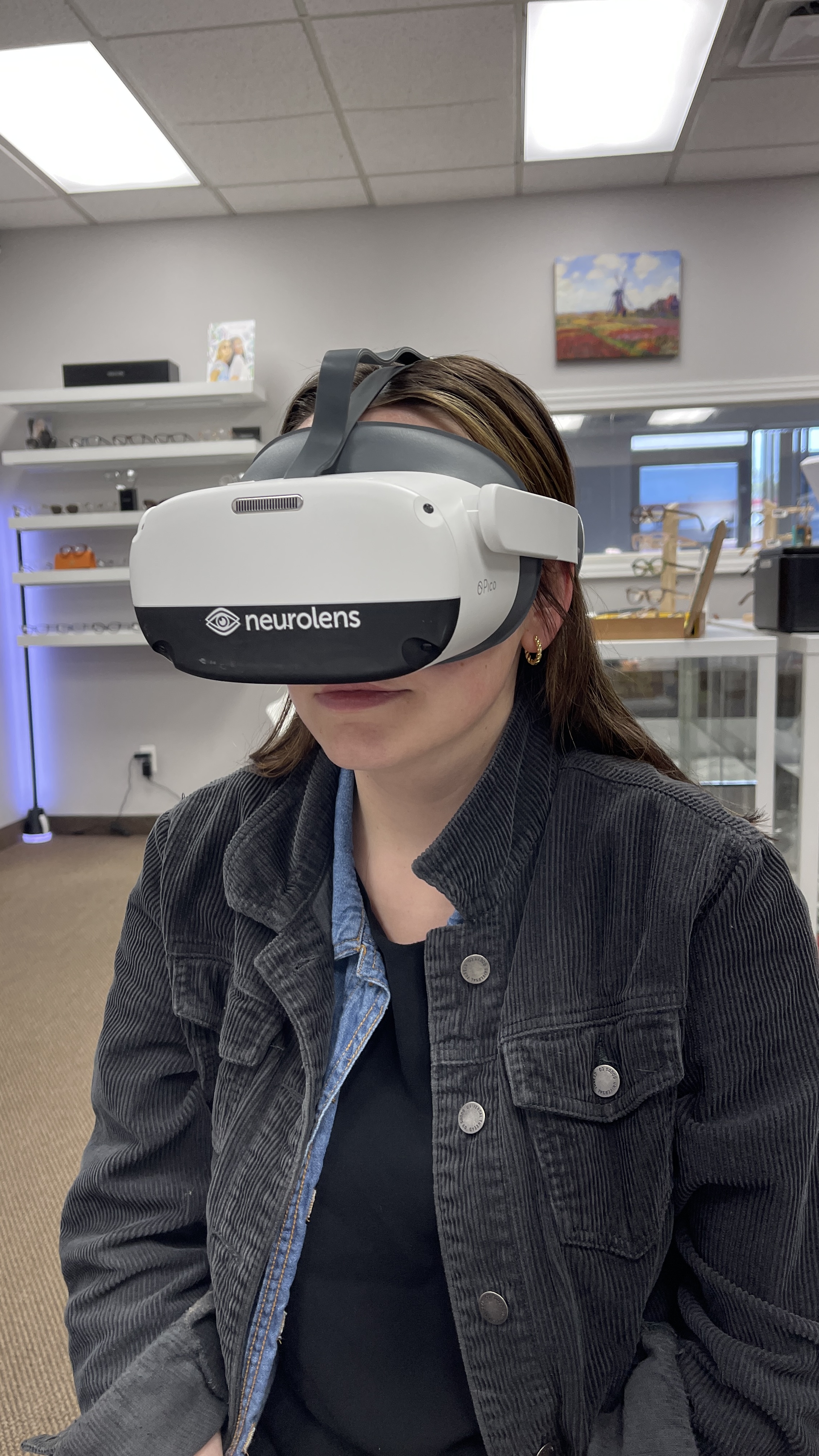
Using the Neurolens Measurement Device, we evaluate eye alignment at both distance and near. The test is quick and non-invasive. You simply focus on a target while the system measures how your eyes respond.
Step 3: Customized Therapeutic Prescription
If misalignment is present, your prescription will include precisely calculated contoured prism integrated with your vision correction.
Step 4: Monitoring and Fine-Tuning
Your comfort matters. We monitor your adaptation and make adjustments if needed to ensure optimal results.
This is not a retail add-on. It is a targeted solution based on objective findings.
Who Benefits Most from Neurolens
• Digital workers & remote employees
• Students & professionals who read or focus up close
• People with chronic headaches or migraines
• Patients whose current glasses don’t reduce discomfort
• Individuals with neck/shoulder pain related to visual tasks
Why Michigan Eye Consultants Is Metro Detroit’s Best Choice
Integrated Medical Expertise
We combine Neurolens technology with a full medical vision assessment — not a retail optical exam.
4.8★ Google Rating — Real Local Results
Patients across Madison Heights and Metro Detroit trust MEC for comfort and relief.
Symptom‑First Approach
We start with your pain — not the glasses.
Same‑Day Appointments Available
In‑clinic capability lets many patients be evaluated quickly.
Frequently Asked Questions
Do Neurolenses work with my current prescription?
Yes. Neurolenses include your standard prescription plus contoured prism customized to your visual demands.
How soon will I feel relief?
Many patients notice improvement within days. Full adaptation may take several weeks depending on symptom severity and visual habits.
What does the Neurolens measurement test feel like?
The test is quick, non-invasive, and takes only a few minutes. You simply look at a target while the device measures how your eyes align at different distances.
Are Neurolenses only for people with double vision?
No. Most Neurolens patients do not see double. Even small amounts of eye misalignment can create strain without obvious double vision.
Can children or teenagers wear Neurolenses?
Yes. Students who spend long hours reading or using screens may benefit if symptoms are present. A proper evaluation determines candidacy.
Will I need to wear them all the time?
For best results, we typically recommend wearing them consistently during waking hours. Some patients use them primarily for work or screen time.
Are Neurolenses covered by insurance?
Neurolens is a therapeutic lens technology and is typically not covered by standard vision plans. However, FSA or HSA funds may be used.
How are Neurolenses different from regular prism glasses?
Traditional prism is fixed and uniform. Neurolens uses contoured prism that changes gradually from distance to near, making it more natural and comfortable for daily use.
What if Neurolens doesn’t help my symptoms?
We perform a comprehensive evaluation before recommending Neurolens. If your symptoms are caused by another condition, we will guide you toward the appropriate treatment plan.
How do I know if I’m a candidate?
If you experience headaches, eye strain, neck tension, or digital fatigue, schedule a Neurolens evaluation to determine if eye misalignment is contributing.
Want to learn more?
If you think you may be experiencing digital eye strain or binocular vision discomfort, we’re happy to help you figure out what’s going on and what options make sense.
Schedule Your Neurolens Evaluation Today.
Quick Links
Helpful Articles
article_category: products
article_category: psychiatry
article_category: faqs
article_category: cats
article_category: general
article_category: services
article_category: technology
article_category: dogs
article_category: restorative
article_category: vision therapy
article_category: contact lenses
article_category: health
article_category: conditions
article_category: eye surgery co-management
article_category: exotic
article_category: cosmetic
article_category: surgical procedures
article_category: aesthetics
article_category: preventative
article_category: ocular disease management
article_category: eyeglasses
article_category: eye health
article_category: large animal
[]
article_category: psychiatry
article_category: faqs
article_category: cats
article_category: general
article_category: services
article_category: technology
article_category: dogs
article_category: restorative
article_category: vision therapy
article_category: contact lenses
article_category: health
article_category: conditions
article_category: eye surgery co-management
article_category: exotic
article_category: cosmetic
article_category: surgical procedures
article_category: aesthetics
article_category: preventative
article_category: ocular disease management
article_category: eyeglasses
article_category: eye health
article_category: large animal
[]
Flowbite is an open-source library of interactive components built on top of Tailwind CSS including buttons, dropdowns, modals, navbars, and more.
Check out this guide to learn how to get started and start developing websites even faster with components on top of Tailwind CSS.

All Eye Care Services
Find personalized eye care excellence with our comprehensive services. From eye exams to advanced diagnostics, trust us for all your vision needs.

Keep In Touch
For non-urgent questions or to learn more about our services, contact us today!

© 2026 Michigan Eye Consultants. All rights Reserved - Accessibility Statement - Privacy Policy - Sitemap
Managed and Designed by 
Michigan Eye Consultants
Patient Advisor
Online
Hello!I'm the MEC Patient Advisor. I can answer questions about our Advanced Dry Eye Program,Neurolens,specialty lenses,pricing,and help get you scheduled with Dr. Wong. What brings you in today?