
Advanced Retinal Imaging
At Michigan Eye Consultants, we use advanced retinal imaging to get a clearer, more complete picture of your eye health—often before you notice any symptoms. These scans help us detect changes earlier, track subtle shifts over time, and make more confident decisions about your care.
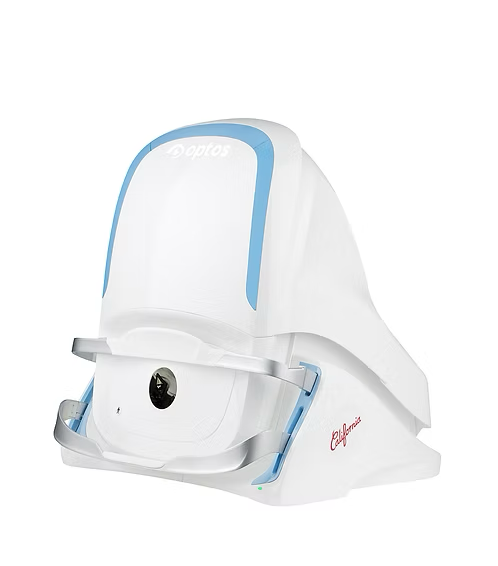
Optomap® Ultra-Widefield Retinal Imaging
Optomap captures a wide view of your retina—the light-sensitive tissue in the back of the eye—in a single image.
Optomap can show more than 82% of your retina in one capture, compared to only about 40–55% with many standard imaging methods. That wider view helps us evaluate both the center and the far edges (peripheral retina), where important findings can be missed.
Optomap can help your doctor screen for and monitor changes related to:
Diabetes- and blood pressure–related eye changes
Retinal tears or thinning (especially in higher prescriptions)
Macular degeneration and other retinal conditions
General retinal health over time (baseline + monitoring)
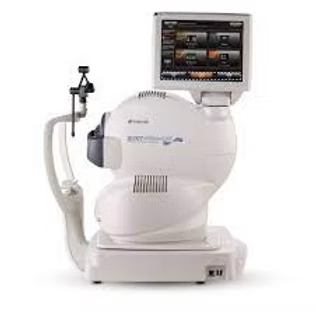
Maestro OCT (Optical Coherence Tomography)
OCT is a non-invasive scan that creates a layer-by-layer “cross-section” of the retina and (when needed) the optic nerve. Think of it like an ultrasound—using light instead of sound—so we can see fine details that aren’t visible on a regular exam.
OCT is especially helpful for:
Glaucoma risk and optic nerve monitoring
Macular degeneration monitoring
Detecting and tracking retinal swelling or fluid
Establishing a clear baseline to compare year over year
Why this matters
Advanced imaging helps us:
Catch issues earlier (often before vision changes)
Confirm what we’re seeing during your exam with more detail
Track subtle changes over time with objective images
Support timely treatment decisions and referrals when needed
Who should consider advanced imaging?
We often recommend retinal imaging if you:
Are 40+, or want a proactive eye health baseline
Have diabetes, high blood pressure, or a family history of eye disease
Have a high prescription (especially higher nearsightedness)
Are a glaucoma suspect or have optic nerve concerns
Have symptoms like new floaters, flashes, or changes in vision
Want the most detailed view of your retinal health
What to expect
These scans are quick and comfortable—usually taking just a few minutes. In some cases, we may still recommend dilation for a more complete evaluation. Imaging doesn’t replace your comprehensive exam—it enhances it.
Want to add advanced retinal imaging to your next visit?
Book now!
Quick Links
Helpful Articles
article_category: products
article_category: psychiatry
article_category: faqs
article_category: cats
article_category: general
article_category: services
article_category: technology
article_category: dogs
article_category: restorative
article_category: vision therapy
article_category: contact lenses
article_category: health
article_category: conditions
article_category: eye surgery co-management
article_category: exotic
article_category: cosmetic
article_category: surgical procedures
article_category: aesthetics
article_category: preventative
article_category: ocular disease management
article_category: eyeglasses
article_category: eye health
article_category: large animal
[]
article_category: psychiatry
article_category: faqs
article_category: cats
article_category: general
article_category: services
article_category: technology
article_category: dogs
article_category: restorative
article_category: vision therapy
article_category: contact lenses
article_category: health
article_category: conditions
article_category: eye surgery co-management
article_category: exotic
article_category: cosmetic
article_category: surgical procedures
article_category: aesthetics
article_category: preventative
article_category: ocular disease management
article_category: eyeglasses
article_category: eye health
article_category: large animal
[]
Flowbite is an open-source library of interactive components built on top of Tailwind CSS including buttons, dropdowns, modals, navbars, and more.
Check out this guide to learn how to get started and start developing websites even faster with components on top of Tailwind CSS.

All Eye Care Services
Find personalized eye care excellence with our comprehensive services. From eye exams to advanced diagnostics, trust us for all your vision needs.

Keep In Touch
For non-urgent questions or to learn more about our services, contact us today!

© 2026 Michigan Eye Consultants. All rights Reserved - Accessibility Statement - Privacy Policy - Sitemap
Managed and Designed by 
Michigan Eye Consultants
Patient Advisor
Online
Hello!I'm the MEC Patient Advisor. I can answer questions about our Advanced Dry Eye Program,Neurolens,specialty lenses,pricing,and help get you scheduled with Dr. Wong. What brings you in today?