
Macular Degeneration (AMD)
Macular degeneration—often called age-related macular degeneration (AMD)—affects the macula, the part of the retina responsible for sharp, central vision. That’s the vision you use for reading, driving, and recognizing faces. AMD usually doesn’t cause pain, and early changes can be easy to miss—so thorough testing and careful monitoring matter.
At Michigan Eye Consultants, we use advanced retinal imaging and functional testing to detect macular changes early and track them accurately over time.
Concerned about your vision?
Book now!
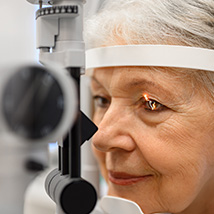
What is the macula?
The macula is the most detail-sensitive part of the retina. When the macula is affected, it can impact central vision (fine detail), while side (peripheral) vision is often less affected.
Types of macular degeneration
Dry AMD
Dry AMD is the more common form. It typically progresses gradually and may involve small deposits (drusen) and thinning changes in the macula. Monitoring is important so we can track progression and watch for signs of change.
Wet AMD
Wet AMD is less common but more urgent. It can develop when abnormal blood vessels grow under the retina and leak fluid or blood, which may cause faster vision changes. If wet AMD is suspected, prompt evaluation by a retina specialist is often needed.
Symptoms of macular degeneration
AMD can affect each person differently. Common symptoms include:
Distortion or “waviness” in straight lines (door frames, blinds, lamp posts)
Blurry central vision or trouble reading fine print
A dark, missing, or blurry spot in the center of vision
Needing brighter light to read
Colors looking less vivid
Difficulty with contrast (especially in dim lighting)
Words disappearing or “breaking up” while reading
If you notice sudden distortion or a rapid change in central vision, call us promptly.
How we evaluate AMD at Michigan Eye Consultants
AMD care is about early detection + precise monitoring. We use tools that look at both retinal structure (what it looks like) and function (how well it’s working):
Maestro 2 OCT (Optical Coherence Tomography)
A high-resolution, layer-by-layer scan of the macula. OCT helps us detect subtle changes—like thinning, swelling, or fluid—and track them over time.
Optomap® Ultra-Widefield Retinal Imaging
A wide view photo of the retina that helps us document overall retinal health and identify additional findings that can influence monitoring and care.
Rabin Cone Contrast Test
Measures color and contrast sensitivity, which can be affected early in macular disease. This can add useful information beyond the standard eye chart.
RetEval ERG (Electroretinography)
A functional test that measures how well the retina responds to light. ERG can provide additional insight in select cases when we want to evaluate retinal function more deeply.
Can you reduce your risk of AMD?
You can’t change every risk factor (like age or family history), but healthy habits can support long-term retinal health. We commonly recommend:
Don’t smoke (or quit if you do)
Eat a heart-healthy diet (especially leafy greens and colorful fruits/vegetables)
Maintain healthy blood pressure and cholesterol
Stay active and maintain a healthy weight
Protect eyes from UV exposure with quality sunglasses outdoors
Keep up with regular eye exams, especially if you have risk factors
If we find certain levels of macular change, we’ll discuss whether specific nutrition strategies or supplements may be appropriate for you.
Treatment and next steps
There isn’t a single “cure” for AMD, but there are effective ways to monitor, slow progression, and treat certain forms—especially when caught early.
Dry AMD
Care often focuses on monitoring, lifestyle support, and protecting remaining vision. You may also benefit from updated prescriptions, contrast-enhancing lens options, and (when appropriate) specific nutritional recommendations.
Wet AMD
Wet AMD is commonly treated by retina specialists with medications designed to reduce abnormal blood vessel activity and fluid leakage. Fast referral matters when wet AMD is suspected.
In select situations, laser-based treatments may be considered by a specialist, but they’re not used for every case.
Schedule an AMD evaluation
If you’ve noticed changes in central vision—or you want proactive monitoring—Michigan Eye Consultants is here with careful, technology-supported care.
Book now!
Quick Links
Helpful Articles
article_category: products
article_category: psychiatry
article_category: faqs
article_category: cats
article_category: general
article_category: services
article_category: technology
article_category: dogs
article_category: restorative
article_category: vision therapy
article_category: contact lenses
article_category: health
article_category: conditions
article_category: eye surgery co-management
article_category: exotic
article_category: cosmetic
article_category: surgical procedures
article_category: aesthetics
article_category: preventative
article_category: ocular disease management
article_category: eyeglasses
article_category: eye health
article_category: large animal
[]
article_category: psychiatry
article_category: faqs
article_category: cats
article_category: general
article_category: services
article_category: technology
article_category: dogs
article_category: restorative
article_category: vision therapy
article_category: contact lenses
article_category: health
article_category: conditions
article_category: eye surgery co-management
article_category: exotic
article_category: cosmetic
article_category: surgical procedures
article_category: aesthetics
article_category: preventative
article_category: ocular disease management
article_category: eyeglasses
article_category: eye health
article_category: large animal
[]
Flowbite is an open-source library of interactive components built on top of Tailwind CSS including buttons, dropdowns, modals, navbars, and more.
Check out this guide to learn how to get started and start developing websites even faster with components on top of Tailwind CSS.

All Eye Care Services
Find personalized eye care excellence with our comprehensive services. From eye exams to advanced diagnostics, trust us for all your vision needs.

Keep In Touch
For non-urgent questions or to learn more about our services, contact us today!

© 2026 Michigan Eye Consultants. All rights Reserved - Accessibility Statement - Privacy Policy - Sitemap
Managed and Designed by 
Michigan Eye Consultants
Patient Advisor
Online
Hello!I'm the MEC Patient Advisor. I can answer questions about our Advanced Dry Eye Program,Neurolens,specialty lenses,pricing,and help get you scheduled with Dr. Wong. What brings you in today?