
5 Signs Your Child Needs a Myopia Evaluation Before School Starts
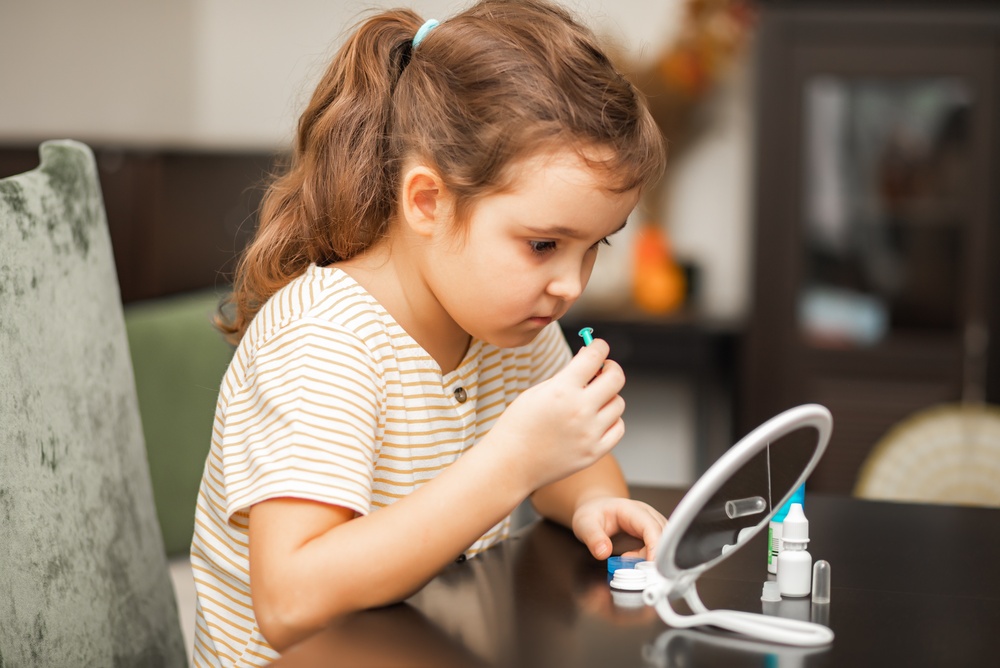
Every August, I see the same thing in my exam chair.
A parent brings in their child — a bright, attentive kid — and somewhere in the conversation it comes out that they’ve been struggling to see the board all year. They’ve been squinting at the screen during class. They’ve been sitting in the front row not because they like it, but because it’s the only way they can make out what the teacher is writing.
And the parent looks at me and says: “But he passed his school vision screening.”
I hear this every single summer. And every time, I have to explain the same important truth: a school vision screening is not a comprehensive eye exam. The two are not the same thing, and confusing them can cost your child an entire school year of struggling to see clearly.
This guide is for every Metro Detroit parent who wants to know what to look for — before fall arrives and those struggles end up in a teacher’s note home.
What School Vision Screenings Actually Test (And What They Miss)
School screenings are designed to be fast. A nurse or volunteer runs your child through a basic 20/20 chart, checks one eye at a time, and marks them as “pass” or “fail.” That’s the entire test.
What a comprehensive eye exam with Dr. Wong actually checks:
- Distance and near visual acuity — how clearly your child sees at all ranges
- Eye teaming and coordination — whether both eyes work together as a team
- Focusing ability — how efficiently your child shifts focus between near and far
- Depth perception and color vision
- Eye health — internal structures, optic nerve, retina
- Myopia progression tracking — whether nearsightedness is worsening year to year
A child can pass a 20/20 screening and still have significant focusing problems, eye teaming issues, or rapidly progressing myopia. The screening won’t catch any of it.
5 Signs Your Child May Need a Myopia Evaluation
1. They Squint — Especially at Distance
Squinting is the body’s natural way of trying to sharpen a blurry image. If your child squints at the TV, at the whiteboard, at road signs from the backseat of the car, or at anything more than a few feet away — that’s a red flag for myopia.
What to watch for: frequent squinting, tilting the head to one side, or closing one eye to see better.
2. They Sit Too Close to Screens or Hold Books Very Close
When a child consistently positions themselves extremely close to a screen, tablet, or book — closer than feels natural — it often means they’re compensating for reduced distance vision. Their near vision may be sharp, but distance is blurry, so they instinctively move the world closer to them.
What to watch for: leaning in during homework, sitting right in front of the TV, or holding a phone or tablet only inches from their face.
3. Frequent Headaches — Especially After School or Reading
Headaches that happen consistently after school, after screen time, or during or after reading can be a sign that the eyes are working too hard. When the visual system is strained — whether from uncorrected myopia, eye teaming issues, or focusing fatigue — it often shows up as headache or eye fatigue.
What to watch for: complaints of headaches in the afternoon or evening, rubbing the eyes, or saying their eyes “feel tired” or “hurt” after reading.
4. Their Glasses Prescription Keeps Getting Stronger
If your child already wears glasses and needs a stronger prescription every year — or every six months — that’s myopia progression. It’s common, but it’s not something you simply have to accept. Fast progression in childhood and adolescence is associated with higher lifetime risk of serious eye health complications.
What to watch for: needing new glasses more than once a year, or a noticeable jump in prescription at each visit. This is exactly the pattern Myopia Management at MEC is designed to address.
5. They’ve Never Had a Comprehensive Eye Exam — Only Screenings
If your child has only ever had school screenings and has never been seen by an optometrist for a full exam, now is the time. The American Optometric Association recommends a comprehensive eye exam before a child starts school and annually thereafter. Many vision problems that affect learning go completely undetected by screenings.
What to watch for: If your child has never had a thorough exam with an eye doctor, that gap in care is itself a sign it’s time to schedule one — especially before another school year begins.
⏰ Why Summer Is the Best Time
Summer is the ideal window to have your child evaluated. We have more availability, appointments are less rushed, and if we find something that needs to be addressed — whether it’s a new prescription, myopia management, or another concern — there’s time to get it sorted before the first day of school. Once August arrives, our schedule fills quickly. If you’ve been thinking about it, now is the time to book.
Myopia Management at MEC: What It Is and How It Works
Myopia — nearsightedness — is one of the most common vision conditions affecting children today, and rates are rising globally. But what many families don’t realize is that myopia isn’t just about needing glasses. Myopia that progresses unchecked throughout childhood and adolescence increases lifetime risk of glaucoma, retinal detachment, cataracts, and other serious conditions.
The goal of Myopia Management isn’t just to correct blurry vision. It’s to slow the progression — to protect your child’s long-term eye health, not just their ability to read the board today.
Stellest Lenses: FDA-Cleared Myopia Management Spectacle Lenses
At Michigan Eye Consultants, Dr. Wong offers Stellest lenses as a primary myopia management solution for children ages 6–16.
Stellest lenses are the first FDA-cleared spectacle lenses clinically proven to slow myopia progression in children. They were developed by Essilor and are designed to be worn as everyday glasses — your child doesn’t need to do anything differently. They look like regular glasses and are worn for the same hours as a standard pair.
How Stellest Works — Clinical Results
Stellest lenses use H.A.L.T. (Highly Aspherical Lenslet Target) technology — a constellation of lenslets built into the lens surface that create a “light barrier” in front of the retina, sending a signal to slow the eye’s axial elongation.
Simply put: they correct vision for the distance your child needs while simultaneously working to slow the process that makes myopia worse.
Shown to slow myopia progression by up to 67% on average in clinical trials
FDA-cleared for children ages 6–16
Effective when worn 12+ hours per day
Works as everyday glasses — no special handling required
Available at Michigan Eye Consultants for new and existing patients
What Our Myopia Management Program Looks Like
When a child comes in for a myopia management consultation at MEC, Dr. Wong takes a comprehensive approach:
Full comprehensive eye exam including myopia progression assessment
Review of family history — myopia has a strong genetic component
Discussion of lifestyle factors: screen time, outdoor time, reading habits
Determination of the best management approach for your child’s specific case
Stellest lens fitting and prescription if appropriate
Scheduled follow-up exams to track progression over time
Myopia management is not a one-time appointment. It’s an ongoing relationship. All Stellest patients are monitored at required intervals — 3 months, 6 months, and 9 months — to track progression and confirm the lenses are working. We adjust the approach as your child grows.
“The families who see the best outcomes are the ones who start early. The younger a child is when we begin managing myopia progression, the more we can slow it down over the long run. If your child is showing signs of myopia — or if it runs in your family — don’t wait for the next screening. Call us and let’s take a look.”— Dr. Kenneth Wong, OD
Parent Q&A: Your Myopia Questions Answered
These are the questions Dr. Wong hears most often from Metro Detroit parents. If yours isn’t here, call us — we’re happy to talk through it.
Q My child just passed their school vision screening. Do they really still need an eye exam?
A Yes. School screenings are a basic pass/fail check of distance vision — they’re not designed to catch everything. They miss issues with eye teaming, focusing, near vision clarity, and myopia that hasn’t yet crossed the “fail” threshold on a 20/20 chart. A comprehensive exam with Dr. Wong takes about 45 minutes and checks all of this. Think of the screening as a smoke alarm — it catches obvious fires. We’re the fire department.
Q At what age should my child have their first comprehensive eye exam?
A The American Optometric Association recommends a comprehensive exam at 6 months, again at age 3, and then before starting kindergarten. After that, annually. If vision problems run in your family — particularly myopia — earlier and more frequent exams are even more important. If your child hasn’t had one yet and they’re school-aged, now is the right time to start.
Q Is myopia genetic? We both wear glasses — does that mean our kids will too?
A Myopia does have a strong genetic component. If one parent is myopic, a child’s risk roughly doubles. If both parents are myopic, the risk is significantly higher. That doesn’t mean progression is inevitable — and it doesn’t mean you can’t do anything about it. It means your child should be monitored closely, and Myopia Management may be worth discussing proactively rather than reactively.
Q What exactly are Stellest lenses and how are they different from regular glasses?
A Stellest lenses correct your child’s vision just like regular glasses — they’ll see clearly with them on. The difference is that Stellest lenses are engineered with H.A.L.T. technology (Highly Aspherical Lenslet Target), a ring of micro-lenses built into the lens surface. These lenslets send a signal to the eye to slow axial elongation — the underlying process that makes myopia worse each year. They look like normal lenses and are worn as everyday glasses. The key is consistent wear: 12 or more hours per day produces the best results.
Q How do I know if my child’s myopia is progressing “too fast”?
A In general, needing a new prescription every 6–12 months, or a prescription change of 0.50D or more per year, is considered significant progression. That said, any change year over year is worth discussing. During your child’s exam, Dr. Wong will review their prescription history and axial length measurements to assess their rate of progression — and give you an honest recommendation about whether myopia management makes sense.
Q Does MEC bill vision insurance for pediatric exams? What if I’m worried about cost?
A Michigan Eye Consultants is a medical optometry practice. We bill medical insurance, not vision insurance plans. We submit courtesy out-of-network claims on your behalf so you can pursue reimbursement through your plan. When you call to book, our team can walk you through what to expect and help you understand your coverage.
We also want families to know that cost is never a reason to put off a child’s eye exam. We accept CareCredit and Affirm — both offer flexible financing options that let you spread the cost of care over time, often with low or no interest depending on the plan you qualify for. Whether it’s the exam itself, Stellest lenses, or myopia management over time, we’d rather help you find a way to make it work than have your child go another year without the care they need.
Q How quickly can we get an appointment?
A We’re currently taking new patients. Summer is our busiest scheduling season, and August especially fills fast as families rush to get exams in before school starts. We’re open every Saturday from 9:30am–4:00pm in addition to our weekday hours. Call us at 586-745-0863 or book online — the sooner you schedule, the more options you’ll have.
Ready to Book? Here’s How to Get Started
A comprehensive eye exam at Michigan Eye Consultants takes about 45 minutes. Dr. Wong will review your child’s full visual health, discuss any concerns you have, and if myopia management is appropriate, walk you through all your options — including Stellest lenses.
We’re located at 29273 Dequindre Rd in Madison Heights and serve families from across Metro Detroit including Troy, Royal Oak, Birmingham, and Bloomfield Hills.
Don’t let another school year start with your child squinting at the board.
Book Your Child’s Comprehensive Eye Exam
📞 Call or text: 586-745-0863
🔗 Online booking: michiganeyeconsultants.com/mecappt.html | Open every Saturday 9:30am–4:00pm
Michigan Eye Consultants | Dr. Kenneth Wong, OD
29273 Dequindre Rd, Madison Heights, MI | michiganeyeconsultants.com | 586-745-0863
Quick Links
Helpful Articles
article_category: products
article_category: psychiatry
article_category: faqs
article_category: cats
article_category: general
article_category: services
article_category: technology
article_category: dogs
article_category: restorative
article_category: vision therapy
article_category: contact lenses
article_category: health
article_category: conditions
article_category: eye surgery co-management
article_category: exotic
article_category: cosmetic
article_category: surgical procedures
article_category: aesthetics
article_category: preventative
article_category: ocular disease management
article_category: eyeglasses
article_category: eye health
article_category: large animal
[]
article_category: psychiatry
article_category: faqs
article_category: cats
article_category: general
article_category: services
article_category: technology
article_category: dogs
article_category: restorative
article_category: vision therapy
article_category: contact lenses
article_category: health
article_category: conditions
article_category: eye surgery co-management
article_category: exotic
article_category: cosmetic
article_category: surgical procedures
article_category: aesthetics
article_category: preventative
article_category: ocular disease management
article_category: eyeglasses
article_category: eye health
article_category: large animal
[]
Flowbite is an open-source library of interactive components built on top of Tailwind CSS including buttons, dropdowns, modals, navbars, and more.
Check out this guide to learn how to get started and start developing websites even faster with components on top of Tailwind CSS.

All Eye Care Services
Find personalized eye care excellence with our comprehensive services. From eye exams to advanced diagnostics, trust us for all your vision needs.

Keep In Touch
For non-urgent questions or to learn more about our services, contact us today!

© 2026 Michigan Eye Consultants. All rights Reserved - Accessibility Statement - Privacy Policy - Sitemap
Managed and Designed by 
Michigan Eye Consultants
Patient Advisor
Online
Hello!I'm the MEC Patient Advisor. I can answer questions about our Advanced Dry Eye Program,Neurolens,specialty lenses,pricing,and help get you scheduled with Dr. Wong. What brings you in today?