
Seeing the World Differently: What Color Blindness Really Is — and What You Can Do About It
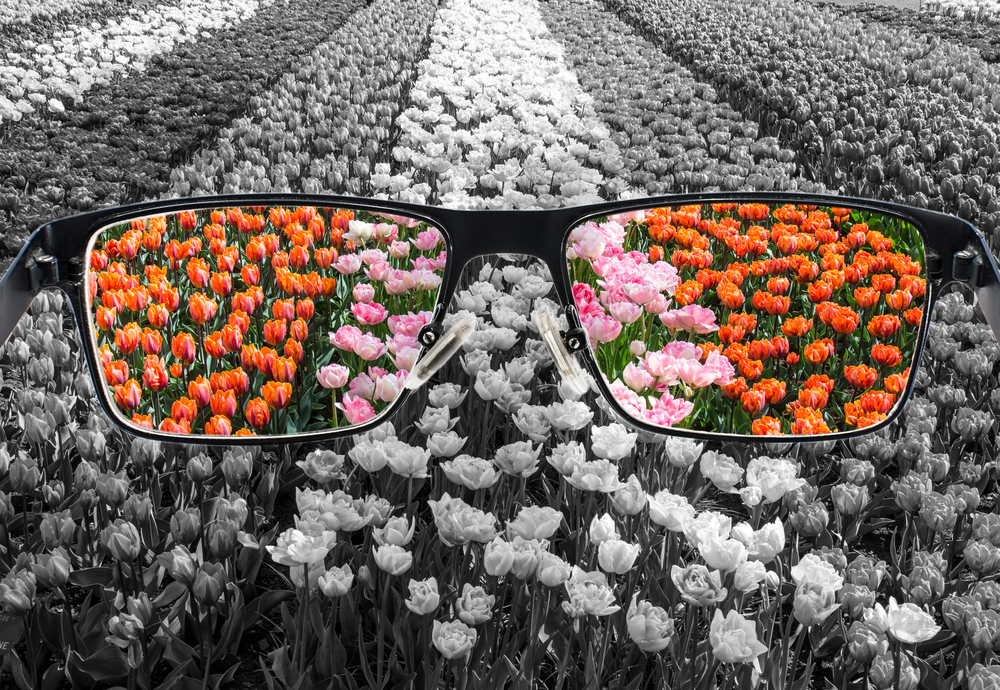
You Might Be Color Blind and Not Even Know It
Here's a stat that surprises most people: roughly 1 in 12 men and 1 in 200 women have some form of color vision deficiency. That's millions of people going about their daily lives — reading, driving, working, raising kids — without realizing their experience of color is fundamentally different from most people around them. Color blindness rarely means seeing in black and white. For most people, it's subtler than that. It's struggling to tell red from green on a traffic light. It's never quite understanding why people get so excited about fall foliage. It's picking out what you think is a navy shirt and being told it's actually purple — again. If any of that sounds familiar, keep reading.
The Science (Without the Snooze)
Your eyes contain two types of light-sensitive cells: rods and cones. Rods handle low-light vision. Cones handle color — and there are three types of them, each tuned to a different part of the light spectrum: red, green, and blue. Color blindness happens when one or more of those cone types is missing, malfunctioning, or has shifted sensitivity. Your brain is only getting partial information, so it fills in the gaps as best it can — which is why many color blind people don't realize anything is off. Their brain has been compensating their whole life. The most common types:
Red-Green Color Blindness — By far the most prevalent. This includes deuteranopia (missing green cones), protanopia (missing red cones), and their milder versions deuteranomaly and protanomaly. Colors in the red-green spectrum appear muted, similar, or indistinguishable.
Blue-Yellow Color Blindness (Tritanopia) — Much rarer. Blues and greens can blur together, and yellows may look pinkish or pale.
Achromatopsia — Complete color blindness, where everything appears in shades of gray. Very rare, often accompanied by light sensitivity and reduced vision.
Color blindness is almost always genetic and present from birth. It's carried on the X chromosome, which is why it's far more common in men. But it can also develop later in life due to certain medications, eye diseases, or conditions like diabetes — which is one more reason regular eye exams matter.
Living With It Without Knowing
This is the part that catches people off guard. Most people with color blindness were never formally diagnosed. They adapted. They learned to read context clues — the position of traffic lights, the labels on clothing, the way coworkers describe things. They developed workarounds so seamlessly that it never felt like a "problem." But it shows up in ways people don't connect to vision:
Kids struggling in school — Color-coded charts, maps, and graphs are everywhere in early education. A child who can't differentiate colors may appear inattentive or behind, when really they're just missing visual information their classmates can see.
Career limitations — Certain fields — aviation, electrical work, graphic design, medicine — have color vision requirements or practical demands that color blindness makes harder to navigate.
Everyday frustrations — Ripe vs. unripe fruit. Matching clothes. Reading maps. Cooking meat to the right doneness. Catching subtle social cues that rely on visual color (like someone looking flushed or pale).
Feeling left out of visual experiences — Sunsets. Fall leaves. Art. The way a city looks at night. These aren't trivial. They're part of the richness of being human.
Many adults reach their 30s, 40s, even 50s before anyone tells them they have color vision deficiency. Some find out by accident — a comment from a partner, a test at the DMV, a child's diagnosis that makes them reconsider their own experience.
So What Can Actually Help? Enter EnChroma.
EnChroma lenses work through a genuinely fascinating mechanism. Rather than adding color where there is none, EnChroma lenses filter out the specific wavelengths of light where red and green cone signals overlap too closely. By removing that interference, the brain receives a cleaner, more separated signal — and suddenly colors that were muddy or indistinguishable become more vivid and distinct. The result for many patients? Seeing autumn leaves in full color for the first time. Telling red from green without guessing. Noticing the richness of a sunset. The response is often visceral — and it's real. A few things worth knowing:
EnChroma lenses work best for red-green color deficiency — the most common type. They are not designed for blue-yellow deficiency or achromatopsia; the evaluation will determine whether you're a candidate.
Results vary person to person. Some people notice dramatic changes; others see more subtle improvement. That's why a proper evaluation matters.
They're not a cure. They enhance color perception within the context of your specific deficiency.
They need time. Most people notice the full effect after 10–15 minutes of wear outdoors, and the experience often deepens over several wearings
EnChroma at Michigan Eye Consultants
Most patients who come to us for an EnChroma evaluation have already tried to figure this out on their own. They watched the videos. They read the reviews. Some ordered a pair online. The experience was underwhelming — or nothing like what they expected. That's not a coincidence. EnChroma lenses aren't a product you fit off a shelf. The type and degree of your color deficiency determines which lens works. Without a proper evaluation, you're guessing. We've seen patients who were strong candidates matched to the wrong lens. We've seen patients pursue EnChroma who weren't candidates at all — and no one told them before they spent the money. Michigan Eye Consultants is the only EnChroma provider in Metro Detroit — and the only practice in this region using the Rabin Cone Contrast Test to do it. Most color vision screenings tell you that you have a deficiency. The Rabin test tells you exactly which cone type is affected, how severely, and whether EnChroma lenses are likely to make a meaningful difference for your specific eyes. That distinction matters. It's the difference between a lens that works and a lens that sits in a drawer. Not every patient who walks through our door is a candidate. The ones who are leave with lenses matched to their actual diagnosis — not a best guess. What we offer:
EnChroma Outdoor Lenses — Designed for natural light, these are where most patients experience the most dramatic results. Great for everyday wear, driving, and spending time outside.
EnChroma Indoor Lenses — Optimized for artificial and mixed lighting. Ideal for office environments, screen use, and situations where outdoor lenses would be too dark.
Polarized Option — Available on select EnChroma lenses for patients who want the added benefit of glare reduction alongside enhanced color perception.
Any Frame You Love — EnChroma lenses can be fit into virtually any frame in our collection. You don't have to sacrifice style to see better color.
The process starts with an evaluation. Everything else follows from that.
Q&A
Q: How do I know if I'm actually color blind?
Most people have never had a formal color vision test. The Ishihara plate test (those dotted circle images) is a common screening tool, but it only tells you that a deficiency exists — not what type or how severe. At Michigan Eye Consultants, we use the Rabin Cone Contrast Test, a precise diagnostic tool that identifies exactly which cone type is affected and to what degree. That specificity is what allows us to determine whether EnChroma is a fit for your eyes — and which lens will actually perform for you.
Q: Can children wear EnChroma lenses?
Yes. EnChroma makes lenses designed for children, and earlier intervention means a child can have a better experience in school and daily life. If your child is struggling with color-coded learning materials or you suspect a color vision issue, bring them in.
Q: Will EnChroma lenses work for me?
That depends on your specific type of color vision deficiency. EnChroma is most effective for red-green color blindness, which is by far the most common type. Our evaluation will tell us whether you're a good candidate and what kind of results are realistic for your situation.
Q: Do they work right away?
Many patients notice a difference within minutes of putting them on outdoors. The full effect typically takes 10–15 minutes and can deepen over multiple wearings as your brain adapts to the new signals.
Q: Do EnChroma lenses go in prescription frames?
Yes. EnChroma lenses can be made with your prescription and fit into virtually any frame we carry. You won't have to choose between vision correction and color enhancement.
Q: Are they covered by insurance?
EnChroma lenses are a specialty optical product and are self-pay — not covered by insurance. We offer flexible financing through CareCredit and Affirm to make that as accessible as possible. We'll walk you through your options at your evaluation.
Q: What's the difference between indoor and outdoor lenses?
Outdoor lenses are designed for bright natural light — they tend to deliver the most vivid color enhancement and are where most patients have their "wow" moment. Indoor lenses are optimized for artificial and mixed lighting, making them better suited for work environments and everyday indoor use. Some patients end up with both.
Q: Can color blindness get worse over time?
Inherited color blindness is generally stable throughout life. However, acquired color blindness — caused by certain diseases, medications, or eye conditions — can progress. Regular eye exams help monitor changes and catch any underlying conditions early.
Ready to See What You've Been Missing?
There is one EnChroma provider in Metro Detroit. That's us. If you've spent your whole life wondering whether you're missing something — or if you're a parent watching a child struggle with color-coded everything and never quite getting an answer — this is where that question gets resolved. Not online. Not at a chain. Here, with an evaluation that tells you exactly what you're working with and whether EnChroma can help. Call us before assuming there's availability. Evaluation slots fill, and we'd rather you be on the schedule than on the fence. Schedule your evaluation:
Call us: 586-745-0863 or 586-302-3222
Visit us online at MichiganEyeConsultants.com • Find us at 29273 Dequindre Rd, Madison Heights, MI 48071
Color is one of the most beautiful parts of being alive. You deserve to experience all of it.
Quick Links
Helpful Articles
article_category: products
article_category: psychiatry
article_category: faqs
article_category: cats
article_category: general
article_category: services
article_category: technology
article_category: dogs
article_category: restorative
article_category: vision therapy
article_category: contact lenses
article_category: health
article_category: conditions
article_category: eye surgery co-management
article_category: exotic
article_category: cosmetic
article_category: surgical procedures
article_category: aesthetics
article_category: preventative
article_category: ocular disease management
article_category: eyeglasses
article_category: eye health
article_category: large animal
[]
article_category: psychiatry
article_category: faqs
article_category: cats
article_category: general
article_category: services
article_category: technology
article_category: dogs
article_category: restorative
article_category: vision therapy
article_category: contact lenses
article_category: health
article_category: conditions
article_category: eye surgery co-management
article_category: exotic
article_category: cosmetic
article_category: surgical procedures
article_category: aesthetics
article_category: preventative
article_category: ocular disease management
article_category: eyeglasses
article_category: eye health
article_category: large animal
[]
Flowbite is an open-source library of interactive components built on top of Tailwind CSS including buttons, dropdowns, modals, navbars, and more.
Check out this guide to learn how to get started and start developing websites even faster with components on top of Tailwind CSS.

All Eye Care Services
Find personalized eye care excellence with our comprehensive services. From eye exams to advanced diagnostics, trust us for all your vision needs.

Keep In Touch
For non-urgent questions or to learn more about our services, contact us today!

© 2026 Michigan Eye Consultants. All rights Reserved - Accessibility Statement - Privacy Policy - Sitemap
Managed and Designed by 
Michigan Eye Consultants
Patient Advisor
Online
Hello!I'm the MEC Patient Advisor. I can answer questions about our Advanced Dry Eye Program,Neurolens,specialty lenses,pricing,and help get you scheduled with Dr. Wong. What brings you in today?