
What Is Photobiomodulation Therapy? A Complete Guide to LLLT for Early Dry AMD
They told you to come back in six months.
Watch and wait.
For something that can take your central vision. Quietly. Gradually. And — if the window closes — permanently.
If you've been told you have early dry AMD, drusen, or early macular changes, you already know the particular weight of that phrase. Watch and wait sounds like a plan. It doesn't feel like one. It feels like counting down while the most important vision you have — the vision that lets you read, drive, recognize your grandchildren's faces — hangs in the balance.
You want to do something. The question is whether there's anything to do.
There is. And the fact that you're reading this means the window is still open.
What Protecting Your Central Vision Actually Means
Your macula is a tiny patch of tissue — about the size of a pencil eraser — sitting at the center of your retina. Despite its small size, it is responsible for nearly everything you consider "seeing."
Reading a menu. Recognizing a face across the room. Watching the road ahead while you drive. Seeing the expression on your grandchild's face. Threading a needle. Reading a text message.
All of that depends on your macula working.
Age-related macular degeneration is a disease that attacks that tiny patch of tissue. It does it slowly, quietly, and — in the early stages — without any symptoms you can feel. By the time you notice something is wrong, the damage is already done.
Here is the single most important thing I want every AMD patient to understand:
⚡ Why This Matters The retinal cells responsible for your central vision do not grow back.
Once they are significantly damaged or lost, that vision cannot be fully restored with any treatment currently available — not glasses, not surgery, not medication.
That is not meant to frighten you. It is meant to make clear why right now — while your central vision is still intact — is the most valuable window of your eye health life. |
The patients I see who act during the early stage are the ones who come back a year later with stable imaging. Same prescription. Same macular health. Still reading. Still driving. Still seeing the faces of the people they love.
That is the outcome we are working toward. Everything below explains how we get there.
Understanding Dry AMD: What Is Actually Happening in Your Eye
To understand why LLLT matters, it helps to understand what dry AMD is actually doing — in plain terms.
Think of your retina as the film inside a camera. It captures light and sends the image to your brain. The macula is the center of that film — the part responsible for sharp, detailed, straight-ahead vision.
In dry AMD, tiny deposits called drusen begin to accumulate beneath the retina — like debris building up under a rug. These deposits are made of cellular waste that the eye's natural cleanup system can no longer clear efficiently. Over time, they disrupt the retinal cells above them, causing those cells to deteriorate.
In the early stages, you won't feel it. You won't notice blurred vision, dark spots, or distortion. Your annual eye exam may simply show the drusen on imaging — and that's when most patients hear the phrase "watch and wait."
But here is what that quiet early period actually represents: it is the best — and often only — chance to intervene before permanent damage occurs.
There are two forms of AMD:
Dry AMD (atrophic): The most common form, accounting for approximately 80–90% of all AMD cases. It progresses slowly as retinal cells break down over time. Most patients have dry AMD.
Wet AMD (neovascular): A less common but faster-moving form in which abnormal blood vessels grow beneath the retina and can cause rapid, severe vision loss. Wet AMD requires urgent specialist care.
LLLT is specifically designed for patients in the early-to-intermediate stages of dry AMD — the stage when intervention has the greatest potential to make a difference.
🔑 Key Point Most people with early dry AMD have no symptoms and don't know they have it. A comprehensive dilated eye exam is the only reliable way to detect macular changes before vision loss begins. If you are over 50 and haven't had a dilated exam recently — or if AMD runs in your family — call us today. |
What Is LLLT — And Why Is It Different From "Watching and Waiting"?
Photobiomodulation therapy — also called Low-Level Light Therapy, or LLLT — is a non-invasive treatment that uses specific wavelengths of light to support the health of your retinal cells at a biological level.
Here is the simplest way to understand it:
Every living cell in your body runs on energy. In your retinal cells, that energy is produced by tiny structures called mitochondria. When AMD begins to take hold, the mitochondria in your retinal cells become less efficient — producing less energy, accumulating more cellular waste, and becoming less capable of repairing themselves.
LLLT delivers precise wavelengths of near-infrared and red light directly to the retinal tissue. Those wavelengths are absorbed by the mitochondria, which respond by producing more cellular energy, clearing oxidative stress, and activating the cell's natural repair processes.
Think of it like this: if your retinal cells are running on a depleted battery, LLLT is the recharge. Not a cure. Not a reversal of damage that's already done. But a meaningful, evidence-supported way to help your cells do their job better — and potentially slow the progression of the disease during the window when that matters most.
In practical terms, LLLT therapy aims to:
Support healthy energy production in retinal cells
Reduce oxidative stress and inflammation at the macular level
Strengthen the resilience of cells that are under early stress from AMD
Potentially slow the progression of early macular changes
LLLT does not replace other cornerstones of AMD care — including AREDS2 supplementation, regular monitoring, and healthy lifestyle choices. It works alongside them as an active, proactive layer of protection.
⚡ Why This Matters LLLT is not available at most eye care practices.
It requires specialized equipment, clinical training, and a physician-supervised protocol. Michigan Eye Consultants is one of a small number of practices in the Metro Detroit area offering this therapy.
If you have early dry AMD and your current provider has not mentioned LLLT, it may simply be that they do not offer it — not that it isn't an option for you. |
What to Expect: An LLLT Session at Michigan Eye Consultants
One of the most common things I hear from patients before their first session is: "I'm a little nervous. I don't know what to expect."
I understand that. Any medical treatment sounds more intimidating than it is before you've experienced it. So let me walk you through exactly what happens.
Before Your First Session
We start with a comprehensive consultation — not just a quick scan and a "you qualify" checkbox. We review your imaging, your OCT results, your family history, and your overall eye health. We talk about what your specific macular findings mean, what we're trying to accomplish, and how we'll know if it's working. You leave that conversation with a clear plan, not just a next appointment.
During Your Session
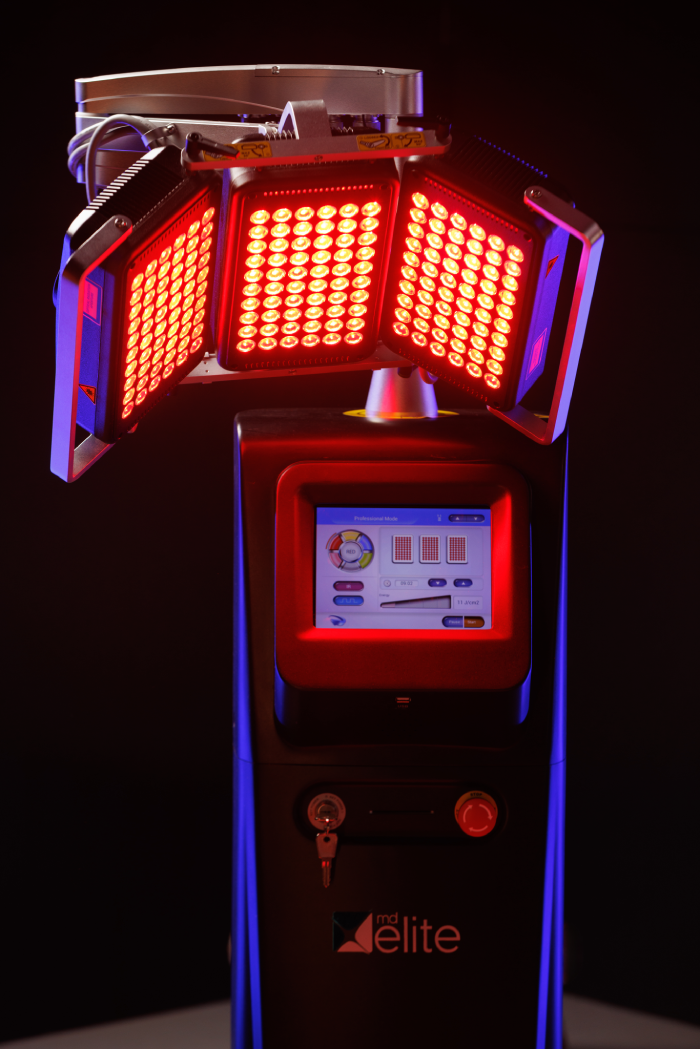
You'll sit comfortably as a calibrated light device is positioned in front of your eyes. No drops. No dilation. No needles. The device delivers specific wavelengths of therapeutic light directly to the retinal tissue — the process typically takes just a few minutes per eye.
You may notice a mild, gentle warmth during the treatment — this is completely normal and expected, particularly during the infrared light phase. It is not painful. Most patients find the sessions quiet and relaxing. Many tell us it's one of the most comfortable treatments they've ever had.
After Your Session
There is zero downtime. You walk out, get in your car, and go about your day. No recovery period. No restrictions. No follow-up instructions beyond scheduling your next session.
We'll build a personalized treatment plan — typically a series of sessions over a defined period, followed by maintenance appointments and ongoing macular monitoring with OCT imaging. At every follow-up, we show you the imaging and explain exactly what we're seeing.
📍 Serving the Greater Detroit North Metro Area Michigan Eye Consultants is located at 29273 Dequindre Rd in Madison Heights — easily accessible from Troy, Birmingham, Royal Oak, Clawson, Bloomfield Hills, and throughout Oakland and Macomb counties. Most LLLT sessions are brief and designed to fit into your schedule without disrupting your day. |
Who Is a Candidate for LLLT?
LLLT is specifically designed for patients in the early-to-intermediate stages of dry AMD — the stage when the cells we're trying to protect are still there to be protected.
You may be a good candidate if you have been diagnosed with:
Early or intermediate dry AMD
Drusen deposits (small or medium-sized) on retinal imaging
Early retinal pigment epithelium (RPE) changes
A family history of AMD with confirmed early macular changes on your own imaging
LLLT is generally not indicated for patients with advanced dry AMD (geographic atrophy) or wet AMD — those conditions require different treatment approaches. But if you are in the early or intermediate stage and you want to do something meaningful rather than simply wait, LLLT deserves a serious conversation.
The best way to know if you're a candidate is a thorough evaluation with our team. If you're coming in from Troy, Birmingham, Royal Oak, Clawson, or Bloomfield Hills and you've been told you have early AMD, I encourage you to call us. We'd like to see your imaging and talk through what's possible.
Your Questions, Answered
These are the questions I hear most often from patients considering LLLT for the first time.
Q: Is this the same as laser treatment?
A: No — and this confusion is understandable because both involve light. Traditional laser treatments used in eye care (such as for certain forms of wet AMD or diabetic retinopathy) use high-intensity light to destroy or seal tissue. That's a surgical tool. LLLT uses very low levels of light to stimulate and support cellular activity — it is non-destructive and works at a biological rather than a structural level. A useful way to think about it: laser therapy is a scalpel; LLLT is more like a vitamin for your retinal cells.
Q: How many sessions will I need?
A: That depends on your specific imaging findings and how your macula responds. We don't use a one-size protocol. Most patients follow a series of sessions over a defined initial period, then transition to scheduled maintenance visits. We'll outline the full plan at your consultation — no surprises.
Q: Does insurance cover it?
A: Currently, LLLT for AMD is an elective, self-pay treatment — it is not covered by Medicare or most commercial insurance plans. We are transparent about costs from the start, and our team can walk you through payment options during your consultation. Many patients tell us that knowing they're actively protecting their vision makes the investment feel very different from an elective cosmetic procedure.
Q: Is the drive from Troy or Royal Oak worth it?
A: From most of the communities we serve — Troy, Birmingham, Royal Oak, Clawson, Bloomfield Hills — the drive to our Madison Heights office is typically under 20 minutes. We schedule efficiently so you're not sitting in a waiting room. And for a treatment that may help preserve your central vision, most patients tell us the drive is the least significant part of the decision.
Q: Can I keep taking my AREDS2 supplements?
A: Absolutely — and we encourage it. AREDS2 supplementation is a proven, recommended part of AMD care for eligible patients. LLLT is designed to work alongside it, not replace it. The two approaches support retinal health through different but compatible mechanisms.
Q: How will we know if it's working?
A: We track your progress with OCT imaging at regular intervals. What we're watching for is stability — a macula that looks the same or better than it did at the start of treatment. For a slowly progressive disease, stability is a meaningful outcome. It means the cells we're protecting are holding. We'll share your imaging at every visit and explain exactly what we're seeing, in plain language.
Q: Is it safe?
A: Yes. LLLT has a strong safety profile. The light used is non-ionizing and operates well below any tissue-damaging threshold. Patients may notice a mild, gentle warmth during the session — especially during the infrared light phase — which is completely expected and normal. All treatments are performed under physician supervision. We will review your specific health profile before beginning and address any questions at your consultation.
Q: What happens if I do nothing?
A: I'll always be honest with you. For some patients with very early AMD, the disease progresses slowly enough that monitoring is a medically reasonable approach — and if that's genuinely your situation, I'll tell you.
But I also want you to understand what "doing nothing" means in the context of this disease. Early dry AMD sits at a fork in the road. One path — with active, proactive management — leads to stable macular health preserved for years. The other path, without intervention, can lead to geographic atrophy: advanced, irreversible AMD where the cells are gone and the options are gone with them.
The patients I think about most are the ones who felt fine, waited, and came back two years later with imaging that looked dramatically different. Not because they were careless. Because no one told them clearly that the window was real, that it was time-limited, and that there was something they could do.
I am telling you clearly. The window is real. And right now, it is open.
This Is the Conversation I Wish Every AMD Patient Could Have
AMD is one of the leading causes of vision loss in adults over 50 in the United States. Millions of people are living with it right now — most of them in the early stages, most of them having been told some version of "come back in a few months and we'll keep an eye on it."
That is not bad advice. Monitoring is real medicine, and I respect my colleagues who deliver it. But monitoring is passive. And for patients who want to be active — who want to know, years from now, that they did everything within their power during the window when it mattered — monitoring alone is not enough.
Photobiomodulation therapy will not undo damage that has already occurred. I will never tell a patient otherwise. But for patients in the early stages — patients whose central vision is still intact, whose macula still has cells worth protecting — LLLT is one of the most meaningful proactive steps currently available. It is evidence-supported, physician-supervised, and offered right here in Madison Heights.
Very few practices in Metro Detroit offer this program. If you have been diagnosed with early dry AMD, you now know it exists, and you know where to find it.
If you'd like to come in, I'd like to meet with you. Not to sell you a treatment. To look at your imaging together, talk honestly about what it shows, and tell you — based on your specific eyes — whether LLLT could be a meaningful part of your care.
That conversation is free. And it might be one of the most important ones you have about your vision.
Schedule Your AMD Consultation at Michigan Eye Consultants
Our team offers comprehensive macular evaluations and physician-supervised LLLT treatment planning for patients with early dry AMD. If you have been diagnosed with AMD — or if you haven't had a dilated eye exam in the last year and you're over 50 — we'd like to hear from you.
📞 Book Your Consultation Michigan Eye Consultants 29273 Dequindre Rd, Madison Heights, MI 48071 Phone: 586-745-0863 / 586-302-3222 Online: https://www.michiganeyeconsultants.com/mecappt.html
Serving patients from Troy, Birmingham, Royal Oak, Clawson, Bloomfield Hills, and the greater Metro Detroit area. |
This blog post is intended for informational purposes only and does not constitute medical advice. Please consult with a qualified eye care professional to determine the most appropriate treatment for your individual condition. — Dr. Wong, Michigan Eye Consultants
Quick Links
Helpful Articles
article_category: products
article_category: psychiatry
article_category: faqs
article_category: cats
article_category: general
article_category: services
article_category: technology
article_category: dogs
article_category: restorative
article_category: vision therapy
article_category: contact lenses
article_category: health
article_category: conditions
article_category: eye surgery co-management
article_category: exotic
article_category: cosmetic
article_category: surgical procedures
article_category: aesthetics
article_category: preventative
article_category: ocular disease management
article_category: eyeglasses
article_category: eye health
article_category: large animal
[]
article_category: psychiatry
article_category: faqs
article_category: cats
article_category: general
article_category: services
article_category: technology
article_category: dogs
article_category: restorative
article_category: vision therapy
article_category: contact lenses
article_category: health
article_category: conditions
article_category: eye surgery co-management
article_category: exotic
article_category: cosmetic
article_category: surgical procedures
article_category: aesthetics
article_category: preventative
article_category: ocular disease management
article_category: eyeglasses
article_category: eye health
article_category: large animal
[]
Flowbite is an open-source library of interactive components built on top of Tailwind CSS including buttons, dropdowns, modals, navbars, and more.
Check out this guide to learn how to get started and start developing websites even faster with components on top of Tailwind CSS.

All Eye Care Services
Find personalized eye care excellence with our comprehensive services. From eye exams to advanced diagnostics, trust us for all your vision needs.

Keep In Touch
For non-urgent questions or to learn more about our services, contact us today!

© 2026 Michigan Eye Consultants. All rights Reserved - Accessibility Statement - Privacy Policy - Sitemap
Managed and Designed by 
Michigan Eye Consultants
Patient Advisor
Online
Hello!I'm the MEC Patient Advisor. I can answer questions about our Advanced Dry Eye Program,Neurolens,specialty lenses,pricing,and help get you scheduled with Dr. Wong. What brings you in today?