
Evaporative Dry Eye (MGD): Why Your Tears Evaporate Too Fast
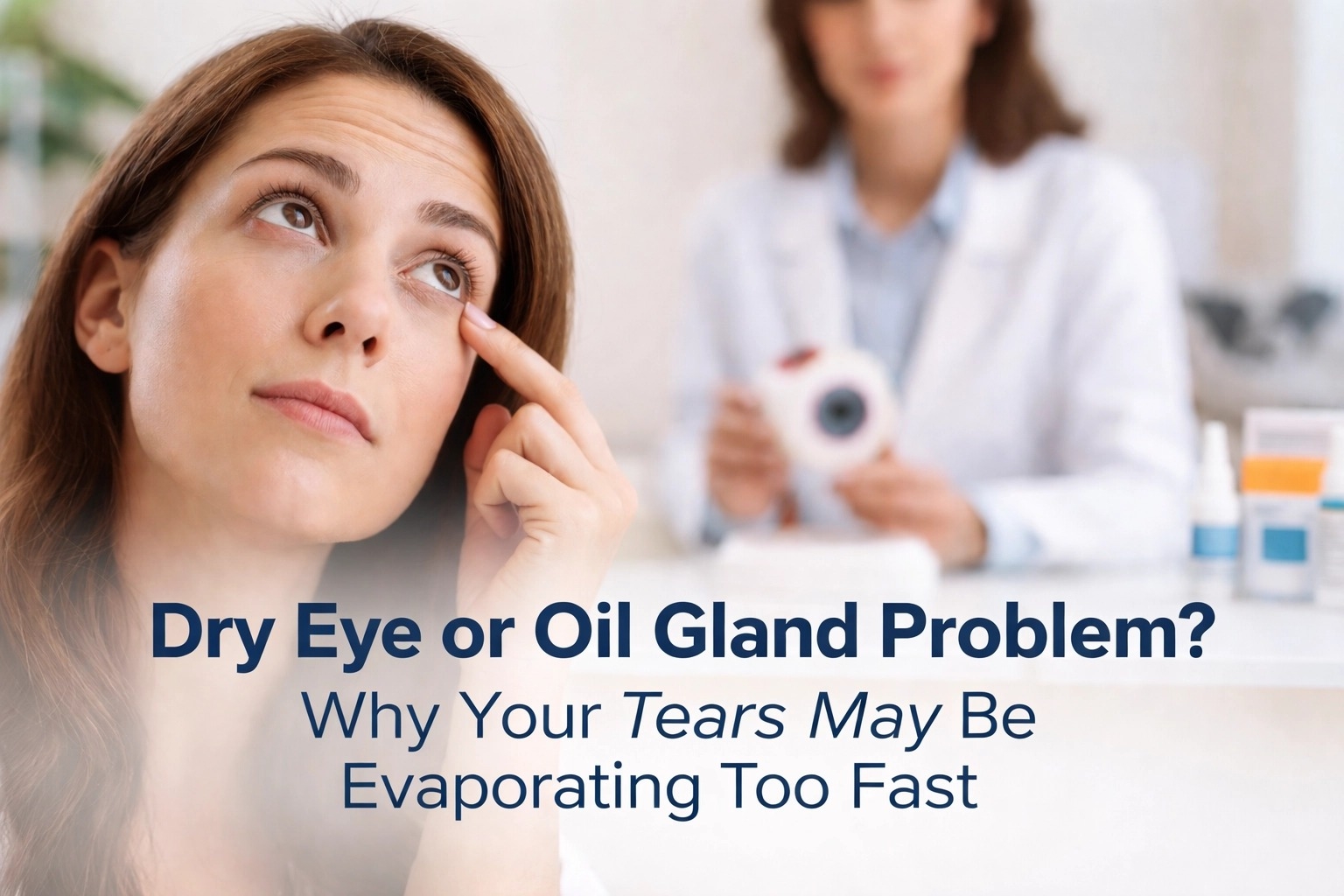
Dry eye can be distracting, uncomfortable, and honestly exhausting—especially when you’ve tried drops and you’re still dealing with symptoms. At Michigan Eye Consultants (MEC) in Madison Heights, we see this every day, and one pattern comes up all the time: for many people, the issue isn’t a lack of tears.
From Birmingham to Troy and Royal Oak, we see patients whose eyes feel worse after long, screenheavy days—especially when drops only help briefly.
It’s that your tears evaporate too quickly.
What it is (Plain English)
Many “dry eye” cases aren’t really a “not enough water” problem. They’re an oil problem.
Your tears need a thin, smooth oil layer to keep them from evaporating. That oil comes from tiny glands along your eyelids called meibomian glands. When those glands get clogged or the oil quality drops, it’s called Meibomian Gland Dysfunction (MGD)—one of the most common reasons tears don’t stay on the eye long enough to keep you comfortable.
At MEC, our goal is to figure out why your eyes feel dry and help you build a plan that makes sense for your symptoms, your daily routine, and your long-term eye health.
Symptoms (Bullets)
Evaporative dry eye / MGD can show up in a few frustrating ways, including:
Burning
Grittiness (that “sand in your eyes” feeling)
Redness
Blurry vision that clears with blinking
Watery eyes (yes—your eyes can water and still be dry)
Why it happens
MGD usually isn’t caused by one single thing. More often, it’s a mix of everyday factors that slowly change how well your oil glands work:
Screens + incomplete blinks: If your day is back-to-back screens and you’re blinking less (or not fully), the oil layer doesn’t spread well—so symptoms build by late afternoon.
Age + hormones: Oil gland output and oil quality can change over time, and hormonal shifts can play a role, too.
Contact lenses: Contacts can contribute to dryness and irritation, especially if your tear film is already unstable.
Environment: Michigan winters (dry indoor heat), summer air conditioning, fans, and car vents can all speed up evaporation.
Allergies / blepharitis: Allergies and eyelid inflammation (often called blepharitis) can irritate the lid margins and interfere with healthy oil flow
Why drops alone often aren’t enough
Artificial tears can be helpful, but if the main problem is that your tears don’t have enough oil, drops are often just a short-term patch.
Think of it like pouring water into a bucket with a hole in it. You can keep adding water, but it won’t stay where you need it. When the oil layer is weak, tears evaporate quickly—so relief from drops may not last long.
Schedule a Dry Eye Evaluation
Call: 586-302-3222
Book Online: www.michiganeyeconsultants.com/mecappt
How we evaluate at MEC
A dry eye visit shouldn’t feel like guesswork. At Michigan Eye Consultants, we keep it practical and patient-focused:
We listen first: We’ll talk through your symptoms, when they happen, what you’ve tried, and what your day looks like (screens, contacts, allergies, medications, etc.).
We check your eyelids and oil glands: We look closely at the lid margins and how your glands are functioning.
We assess your tear film: We evaluate how stable your tears are and what might be breaking down too quickly
Then we walk you through what we found in plain language so you know exactly why we’re recommending certain next steps.
Treatment options at MEC
Dry eye is not one-size-fits-all. If your tears are evaporating too quickly, the goal is usually to improve the oil layer, calm inflammation, and protect the eye surface—based on what we find during your evaluation.
Manual expression: May help clear blocked oil glands and support healthier oil flow.
NuLids: May support consistent lid hygiene by reducing debris along the lash line.
IPL/RF: May help calm inflammation around the eyelids and support healthier oil gland function over time.
Punctal plugs (select patients): May help keep moisture on the eye surface longer for certain patients
Amniotic membrane (select cases): May be recommended to calm irritation and support healing of the eye surface.
When to book
If you’re using drops constantly and they’re just not cutting it anymore, it’s a good time to book a dry eye evaluation—especially if your vision gets intermittently blurry or your eyes feel worse at the end of the day.
We’re in Madison Heights and see patients from across Metro Detroit, including Royal Oak, Troy, Birmingham, and Grosse Pointe.
Schedule a Dry Eye Evaluation
Call: 586-302-3222
Book Online: www.michiganeyeconsultants.com/mecappt
FAQs (5 questions)
1) What is MGD (meibomian gland dysfunction)?
MGD happens when the tiny oil glands along your eyelids aren’t releasing healthy oil. Without that oil, your tears can evaporate too quickly, which may leave your eyes irritated and your vision fluctuating
2) Why do my eyes water if they’re “dry”? When your eyes get dry and irritated, they can overreact by making extra watery tears. Those tears often don’t have enough oil to stay on the eye, so they spill over while your eyes still feel dry
3) Is evaporative dry eye the same as “regular” dry eye? Dry eye is an umbrella term. Some people mainly don’t make enough watery tears. Others (very commonly) have evaporative dry eye where the oil layer is the main issue. Many patients have a mix of both.
4) What can I do at home while I wait for an appointment? Simple steps may help: take screen breaks, practice full blinks, avoid direct airflow to your face, and use warm compresses if they feel soothing. If symptoms are persistent, an evaluation helps you avoid guessing.
5) Does insurance cover dry eye care at MEC? We accept medical insurance, including Medicare, Medicare Advantage, major commercial medical insurance, and certain Medicaid plans. Some dry eye evaluations and treatments may be covered by medical insurance when medically necessary; however, some advanced dry eye and oil gland treatments are self-pay only. Our team can help you understand your options before you move forward.
Quick Links
Helpful Articles
article_category: products
article_category: psychiatry
article_category: faqs
article_category: cats
article_category: general
article_category: services
article_category: technology
article_category: dogs
article_category: restorative
article_category: vision therapy
article_category: contact lenses
article_category: health
article_category: conditions
article_category: eye surgery co-management
article_category: exotic
article_category: cosmetic
article_category: surgical procedures
article_category: aesthetics
article_category: preventative
article_category: ocular disease management
article_category: eyeglasses
article_category: eye health
article_category: large animal
[]
article_category: psychiatry
article_category: faqs
article_category: cats
article_category: general
article_category: services
article_category: technology
article_category: dogs
article_category: restorative
article_category: vision therapy
article_category: contact lenses
article_category: health
article_category: conditions
article_category: eye surgery co-management
article_category: exotic
article_category: cosmetic
article_category: surgical procedures
article_category: aesthetics
article_category: preventative
article_category: ocular disease management
article_category: eyeglasses
article_category: eye health
article_category: large animal
[]
Flowbite is an open-source library of interactive components built on top of Tailwind CSS including buttons, dropdowns, modals, navbars, and more.
Check out this guide to learn how to get started and start developing websites even faster with components on top of Tailwind CSS.

All Eye Care Services
Find personalized eye care excellence with our comprehensive services. From eye exams to advanced diagnostics, trust us for all your vision needs.

Keep In Touch
For non-urgent questions or to learn more about our services, contact us today!

© 2026 Michigan Eye Consultants. All rights Reserved - Accessibility Statement - Privacy Policy - Sitemap
Managed and Designed by 
Michigan Eye Consultants
Patient Advisor
Online
Hello!I'm the MEC Patient Advisor. I can answer questions about our Advanced Dry Eye Program,Neurolens,specialty lenses,pricing,and help get you scheduled with Dr. Wong. What brings you in today?